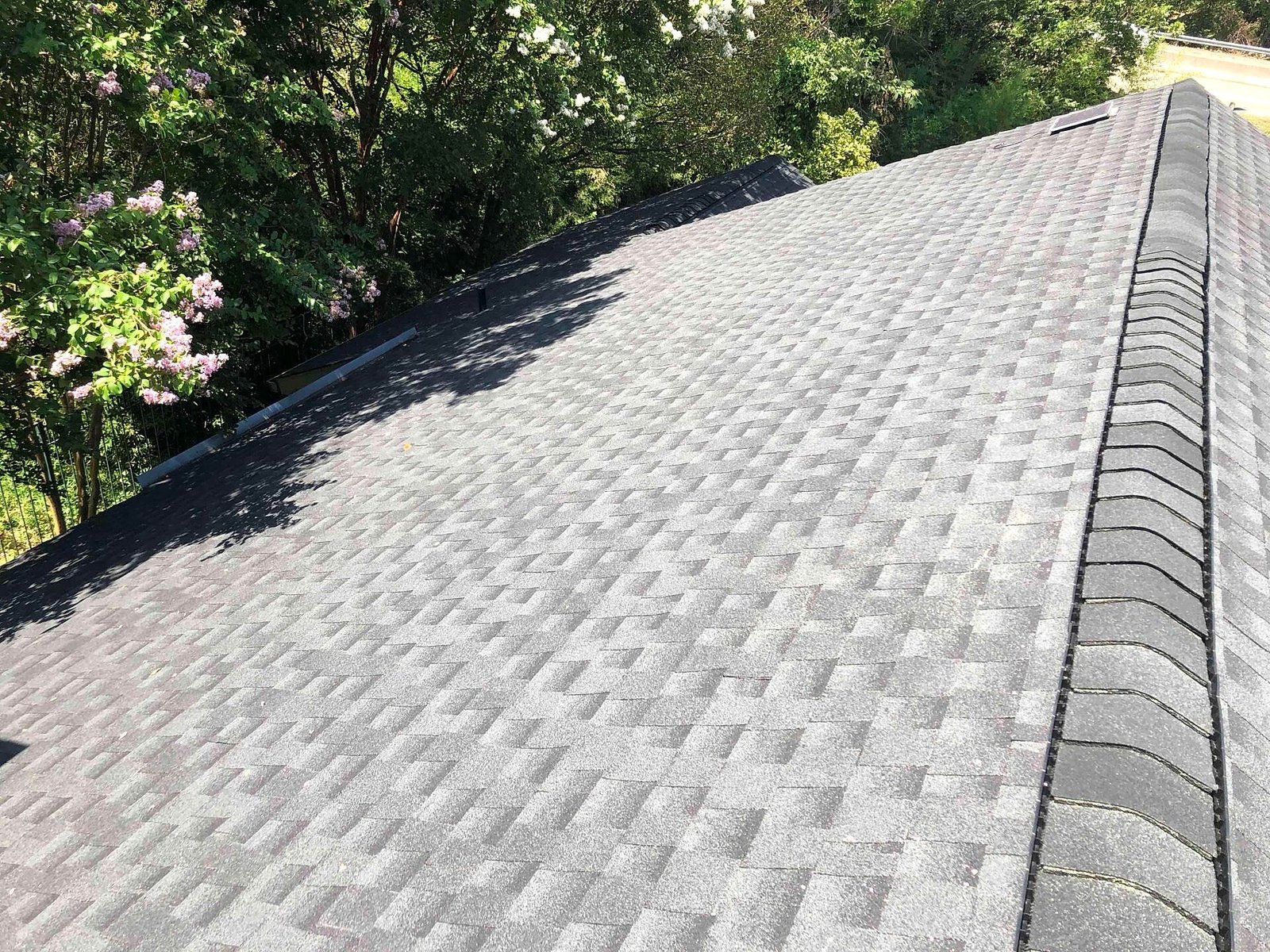
Published October 7, 2026 · Roofing Giant Editorial Team · Roofing Giant Intelligence Brief
Audio edition of our source-first October 7 reporting. The amendment discussed was proposed—not adopted—at the time of recording; confirm current rulemaking status with TDI.
Roofing Giant Intelligence Brief · Audio
Roof Age vs. Roof Condition: The DFW Homeowner Briefing
Roof age is a date. Roof condition is evidence.
What this episode covers
On September 29, 2026, the Texas Department of Insurance filed proposed clarifications to 28 TAC §21.1006. TDI says the existing rule prohibits refusing to write or renew residential property insurance based solely on the age of a home or roof; insurers can still consider actual physical condition and other lawful underwriting factors. The amendment was still proposed as of October 7, 2026.
- How an older roof and a deteriorated roof are different questions, with hypothetical examples.
- Which installation records, photographs, professional condition reports and maintenance details to keep.
- How to request clarification if an insurer declines or does not renew a policy.
- What professional roof inspections can establish—and their limitations.
- Why contractors document roofing scope while insurers decide insurance coverage and payment.
- The TDI rulemaking hearing and comment calendar as known on October 7, 2026.
Practical safety reminder: do not climb wet, steep, damaged or unstable roofs. Use safe ground-level documentation and qualified professionals.
Read the source reporting
This episode expands—not replaces—our published article, Texas Roof-Age Insurance Rule: What DFW Homeowners Should Document in 2026, which contains the original visual explainer, methodology, limitations, agency links and corrections pathway.
- TDI September 29 news release
- TDI proposed 28 TAC §21.1006 amendment (PDF)
- TDI 2026 rulemaking status
- Docket No. 2874 hearing information
- TDI residential-policy action and reason data
Full episode transcript
Expand the complete transcript
Roofing Giant Intelligence Brief. October seventh, twenty twenty-six. Texas Roof Age Versus Roof Condition: What Dallas–Fort Worth Homeowners Need to Know.
Imagine receiving a notice that your roof is too old for an insurance company to consider. You know its installation date. You have maintained it. You see no leaks. But you’re left wondering: is a roof’s birthday really the same as its condition?
Welcome to the Roofing Giant Intelligence Brief, where we examine decisions that affect roofs across North Texas, using published evidence and practical construction knowledge rather than sales slogans.
Today we’re unpacking a specific regulatory proposal from the Texas Department of Insurance. And here’s our starting point: roof age is a date. Roof condition is evidence.
An important caution, right up front. On September twenty-ninth, twenty twenty-six, the Texas Department of Insurance filed a proposed clarification concerning section twenty-one point one zero zero six of the Texas Administrative Code. As of October seventh, the amendment was still a proposal. It was not an adopted new law. Some headlines may compress that distinction, but we won’t.
TDI explains that its existing rule prohibits an insurer from refusing to write or renew a residential property insurance policy based only on the age of the home or a component, including its roof. The proposed text would make that roof-specific distinction more explicit. At the same time, the department recognizes that an insurer may evaluate the actual physical condition of a roof and other lawful underwriting factors.
Those two halves belong together. The proposal is not an unconditional guarantee of insurance. And it is not a statement that all older roofs are safe or insurable. It is about distinguishing a number on the calendar from observable evidence.
Let’s make that concrete with a hypothetical Dallas–Fort Worth example. These are illustrative homes, not actual Roofing Giant case files.
Home A has a fifteen-year-old roof. Its homeowner kept the original invoice and the product specifications. After several severe-weather seasons, the homeowner arranged inspections and repaired a flashing problem before it caused serious interior damage. There are dated photographs and maintenance records. Nothing in those records can guarantee that an insurer will accept the risk, but they can explain what was installed and what has happened since.
Home B also has a fifteen-year-old roof. Its installation records are missing. The roof has areas of lifting, deteriorated sealant, displaced material, and visible signs of moisture entry. In this example, the roofs have exactly the same age but substantially different observed conditions.
Now turn the example around. A relatively new roof might have an installation defect or storm damage. A much older roof might still be serviceable. There is no single age that proves condition. A date can guide questions; it cannot substitute for inspection.
This matters in our region because Dallas, Fort Worth, Frisco, The Colony, McKinney, and surrounding communities experience hail, strong wind, summer heat and ultraviolet exposure. Those hazards do not affect every property in the same way. A storm track can cross one neighborhood and miss another. Buildings have different orientations, roof geometry, material systems, ventilation, drainage, maintenance history and exposure. Therefore, a citywide weather headline cannot prove what happened on one particular roof.
Here is how homeowners can build a useful roof history without becoming roofing experts.
Start with identity. What is your roof? Not simply a color or a manufacturer’s brand, but the material, product line, installation date, warranty information, and any available records of permitted work. If you paid for a replacement, preserve the contract, scope and paid invoice. If the house changed owners, check the closing file and request available documentation from the previous owner or contractor.
Next comes installation and assembly. A roof is not just the visible shingle or panel. It also depends on flashing where the roof meets walls, chimneys and roof penetrations, plus ventilation, underlayment, drainage and fastening details. The exact assembly varies by system. A professional condition report should avoid presenting visual appearance as proof of hidden work that has not been examined.
Now, maintenance. Keep records of repairs, minor leaks, sealant work, gutter and drainage problems, ventilation corrections and professional recommendations. A repair invoice should say where work was done and what was corrected. It is helpful if the document includes dated photographs. If someone tells you a repair was made, ask for enough detail that the work can be identified later.
Then, photographs. A safe sequence of ground-level and interior photographs, together with professional rooftop photos when appropriate, can create a baseline. Do not climb onto a wet, steep, damaged or unstable roof. A homeowner does not need to risk a fall to document a property. Take pictures of visible stains indoors, exterior drainage, shingles visible from safe positions, and any relevant conditions that can be seen without dangerous access.
Date your records. An undated photograph might be useful, but a dated photograph with location and context is stronger. Keep the full original image file where possible, rather than relying only on a screenshot or a compressed image from a text message.
What should an inspection report actually say? Ideally, it should identify the property and inspection date, the roof system observed, areas examined, visible conditions, limitations of access, significant findings, photographic evidence, and appropriate next steps. It should distinguish observation from assumption. If a portion of the roof cannot be inspected safely, that limitation belongs in the report.
There are also things an inspection cannot always establish. Some problems are concealed under roof coverings or inside assemblies. A visual inspection may not establish the original installation details, exact remaining service life, or the cause and timing of every condition. If further investigation is recommended, that should be stated clearly instead of replaced with a confident guess.
Let’s discuss a homeowner question that comes up constantly: does this rule mean an insurer cannot consider an older roof? No. The proposal concerns decisions based solely on age. It does not remove permissible considerations of physical condition or other lawful underwriting factors. It does not require an insurer to ignore a documented defect. And it does not override the specific terms and conditions of an individual policy.
Another question: does a good inspection mean the insurance company must issue or renew coverage? No. An inspection documents observations. The insurer evaluates underwriting under applicable law. If you want to understand the company’s decision, ask the company or your insurance agent directly.
What if you receive a declination or nonrenewal notice? Begin by preserving the complete written notice, including dates, attachments and envelopes or delivery records if relevant. Ask the insurer or your agent to identify the underwriting basis. If the stated reason refers to roof age, ask whether actual physical condition or other factors were considered and what evidence the insurer relied upon. Keep a contemporaneous record of your questions and responses.
If information about the roof is missing or inaccurate, you can gather the available installation and condition records and ask the insurer what its review process allows. Do not assume that providing new documents will automatically reverse a decision. And do not assume that the contractor can negotiate policy coverage on your behalf.
Another common situation: the insurer asks for an inspection before renewal. Ask what information the company wants, what format it accepts, and the deadline. A technically competent report is much more helpful if it answers the actual underwriting question. But a roofing contractor should still report accurately, even when the findings are inconvenient.
Now consider the difference between underwriting and a storm claim. Underwriting asks whether and on what terms a company will insure a risk. A claim asks whether a reported event and resulting loss qualify for coverage and payment under the policy. Those are distinct processes. A roof inspection can help document physical observations relevant to either, but it is not a coverage determination.
For example, a roof may have a condition that calls for repair even when no insured event is established. Conversely, a storm may create observable damage on a roof of any age. Roofing Giant can inspect the physical condition, describe roofing scope and prepare construction estimates. The insurer, not Roofing Giant, determines insurance coverage and policy payment. Roofing Giant is a roofing contractor, not a public adjuster.
Let’s give you a practical one-minute checklist. One: find the roof replacement date and paid invoice. Two: identify the product and material. Three: locate permits and final inspections when applicable. Four: save warranties and impact-resistance information, if documented. Five: preserve dated safe photographs and professional inspection reports. Six: save maintenance and repair records. Seven: if an insurer sends a notice, preserve it and ask for a written explanation of the actual basis.
You do not need to complete every one of these items today. You need a system you can update. A simple folder labeled Roof Records, divided into Installation, Inspections, Repairs, Storm Events and Insurance Correspondence, is often enough to begin.
If you own rental property or manage multiple buildings, consistency matters even more. Use the same identification and documentation process across locations, then record the site-specific differences. Avoid describing one property based on a photograph from another. Clear asset identity, date and evidence provenance are fundamental.
Here’s another nuance: not every weather event should trigger a new dramatic roof claim. The responsible step is to determine whether there is a reason for concern and document what is actually observable. Watch for interior leaks, displaced materials, abnormal drainage or signs of impact in safely accessible areas. Let a qualified professional assess uncertain roof conditions. Do not rely on social media photographs from another town as evidence of damage at your address.
And if someone says your roof has only a fixed number of years remaining? Ask how they arrived at that conclusion. Did they examine the roof? What material system is involved? What defects are visible? What are the limits of the observation? Remaining service life is an estimate subject to conditions and future events, not a precise countdown clock that can always be inferred from the install year alone.
The same disciplined thinking applies to repair versus replacement. Localized damage may justify a focused repair if the surrounding system can perform and compatible materials are available. More extensive failure may warrant comparing replacement scope. That construction decision should rely on evidence, feasibility, material compatibility and long-term performance. It should not be reduced to the age printed on a disclosure form.
Let’s return to the Texas Department of Insurance proposal. As of the October seventh publication date of this briefing, TDI’s calendar showed Texas Register publication scheduled for October ninth, a hybrid public hearing in docket two-eight-seven-four scheduled for November third at two p.m. Central, and written comments due November ninth at five p.m. Central. Those are scheduled steps in a rulemaking, not proof that a final amendment has taken effect. Before relying on a deadline or final text, check the current TDI website.
You can find the Texas Department of Insurance at tdi dot texas dot gov. Its consumer telephone number is eight hundred, two five two, three four three nine. For questions about insurance rules or an insurer’s conduct, the department is an appropriate primary source.
Now for the most important limitation. This is general educational information, not legal, insurance, public-adjusting or financial advice. Rules can change; companies may evaluate factors not discussed in this episode; individual policy terms and property conditions vary. We have not reviewed your roof or your policy. We cannot tell you whether your property qualifies for insurance from this recording.
What we can say is that good documentation helps people make better-informed decisions. It can make the conversation more precise. Instead of just saying, my roof is old or my roof looks fine, you can identify the assembly, installation date, recent observed condition, repairs, photographs and limitations of what was examined.
That discipline is valuable for a homeowner, for a potential buyer, for a property manager, and for the qualified people who eventually need to evaluate the building.
Roof age is a date. Roof condition is evidence. One may alert you to ask questions. The other requires observations and records.
Do not wait for a renewal letter, a property sale or a storm to reconstruct years of roof history from memory. Organize what you know now, and obtain a professional inspection when the condition is uncertain.
Roofing Giant serves Dallas–Fort Worth property owners and can document observable roofing conditions and prepare appropriate construction scope. Our qualified roofing crews and subcontractors work to Roofing Giant standards. We do not act as a public adjuster, interpret policy coverage, or guarantee an insurer’s decision.
For the published source article, primary links and correction information, visit Roofing Giant dot com and look for the October seventh roof-age insurance update.
You’ve been listening to the Roofing Giant Intelligence Brief. Know what the roof needs before you decide what to buy.
Editorial methodology, scope and corrections
The Roofing Giant Editorial Team adapted the October 7, 2026 original article and linked primary TDI materials into a spoken briefing. Illustrative comparisons are hypothetical, not Roofing Giant customer cases or insurer decisions. As of the recorded editorial cutoff the regulation was proposed, not adopted. This audio does not evaluate a specific property, insurance policy, insurer manual or claim; future rulemaking may change the status. See Roofing Giant Editorial Standards & Corrections for sourcing and correction procedures.
Information only. Roofing Giant is a roofing contractor that manages qualified crews and subcontractors to Roofing Giant standards; it is not a public adjuster and does not determine coverage, underwriting, or claim payment. Not insurance, financial or legal advice.