
Roofing Giant · Guide
North Texas regularly experiences severe hail. This guide shows common hail-damage indicators, what a roof inspection can document, and how to preserve photographs and storm information if you later decide to contact your insurer.
How this page fits: this guide explains what hail damage can look like and what to do next. For storm-date context, use Storm Lookup Tools; for a quick ground-level check, use the Hail Damage Self-Check; for a documented roof assessment, use Roof Inspection; and for the photo/report record to preserve after hail or wind, use Roof Inspection Documentation After Hail in Dallas.
Need one starting point after a DFW storm? Use the DFW Roof Decision Center to compare hail documentation, repair vs. replacement, insurance steps and cost planning. If damage is confirmed, review Roofing Giant’s storm restoration process.
When hail happens here
Dallas–Fort Worth hail season runs from March through June, when warm Gulf moisture meets cold fronts and dry lines over North Texas. A second, smaller season arrives in September and October. Storms usually form to the west and track east-northeast, which is why Parker, Tarrant and Denton counties are often hit first and Collin and Rockwall counties later the same evening.
You can confirm the date and size of hail at your address using NOAA’s Storm Events Database and the Storm Prediction Center reports; our storm lookup page walks through both.
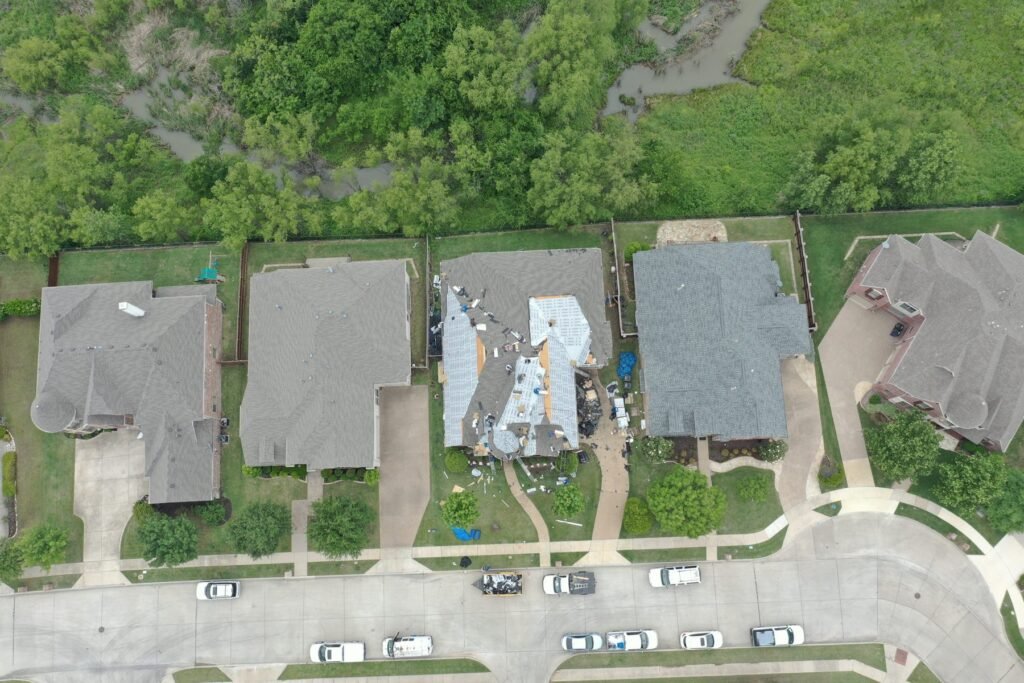
What hail damage looks like
- Bruises. Soft, dark, slightly sunken spots where the granules were knocked loose and the fiberglass mat was fractured. They feel like a bruise on an apple.
- Granule loss. Bare patches with the black mat showing; granules collect at downspout outlets and in gutters.
- Collateral impact marks. Gutters, downspouts, roof vents, pipe boots, AC condenser fins and window screens can show impact marks. Inspectors commonly photograph these surfaces as supporting context, but they do not by themselves establish shingle damage.
- Cracked or shattered shingles. Common with hail above two inches or on older, brittle three-tab shingles.
- Wind creasing. Horizontal creases can form where wind lifts or folds a shingle. Wind damage is evaluated separately from hail damage, and insurance coverage depends on the policy and insurer.
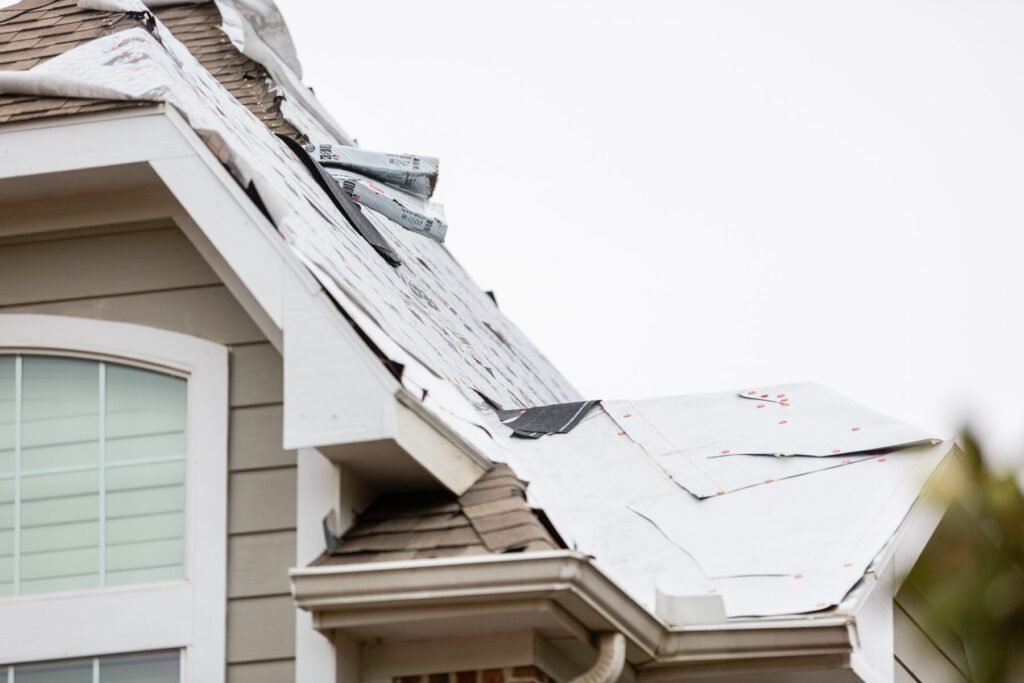
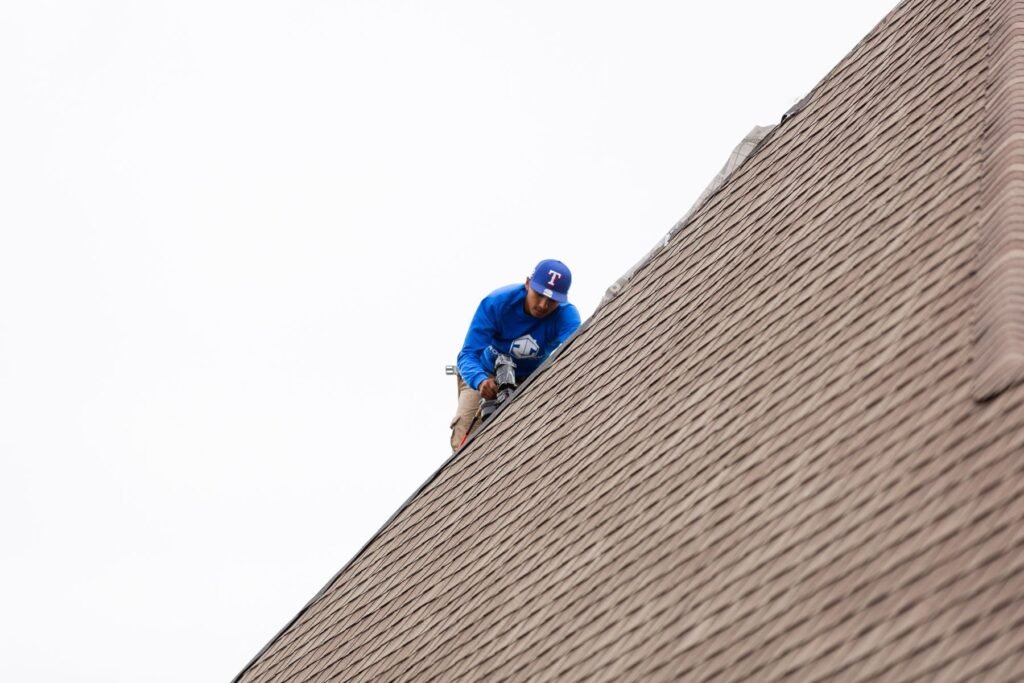
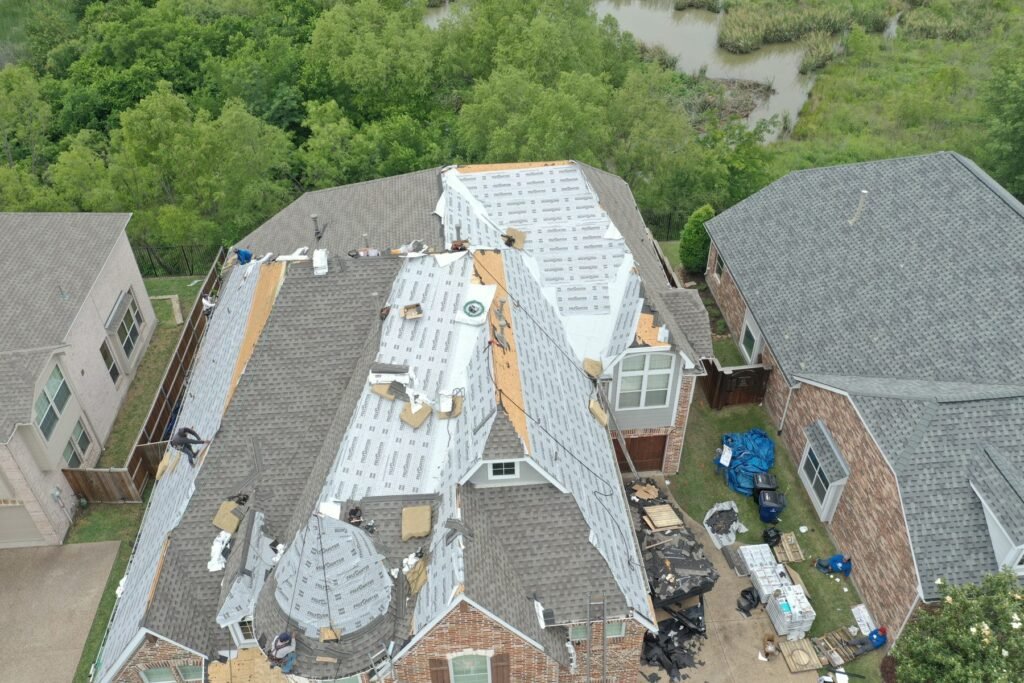
How an inspector documents it
Inspectors mark a 10-by-10-foot test square on each slope and count the hits inside it. A roof inspection can use test areas to document visible impacts by slope. Observed marks can be chalked and photographed, collateral conditions can be recorded for scale, and storm reports can provide date and location context. Your insurer applies its own inspection, policy and coverage criteria.
What to do after a storm
Stay off the roof
Look from the ground and inside the attic. Photograph what you can see safely.
Run the self-check
Our hail damage self-check scores the warning signs in two minutes.
Book a free inspection
Get test squares, photos and a written report before calling your insurer.
Decide with numbers
Use the deductible calculator; read the claim process guide; then file if it makes sense.
Hail questions
How long do I have to file a hail claim in Texas?
Notice and filing requirements vary by policy and circumstances. Review your policy and contact your insurer promptly rather than assuming a universal deadline. A roof inspection can document the current roofing condition, but Roofing Giant does not interpret policy deadlines.
Will impact-resistant shingles stop hail damage?
Class 4 shingles have passed a specified impact-resistance test, but no shingle is hail-proof. Some insurers may offer discounts for qualifying products; confirm eligibility and documentation directly with your insurer.
Can a roofer tell me if I have a claim?
A roofer can document observed roof conditions and prepare a repair estimate. Only your insurer decides coverage and the claim. Roofing Giant can meet the insurer’s adjuster on the roof to point out documented conditions and discuss technical roofing scope.
More storm repair resources
Storm-documented Roofing Giant project evidence
These case studies explicitly document storm context in Roofing Giant’s historical project records. They are examples of completed work, not evidence that every hail event damages every roof.
More storm and roofing guidance: return to the DFW Roofing Guides & Knowledge Center for wind damage, inspection, repair/replacement and insurance-restoration resources.
Hail damage vs. aging, wear and other roof conditions
A storm date near the property does not prove that a roof was damaged, and an old or worn roof does not prove that every visible defect is age-related. A useful inspection separates observed conditions from weather history and documents what is actually present on the roof.
Conditions that can support a storm-damage investigation
- Fresh impact marks or deformation on compatible collateral surfaces such as vents, soft-metal components or gutters.
- Shingle bruising, fractures or other impact-related conditions that are documented consistently across affected slopes.
- Wind-lift, creasing or displaced materials where the pattern and surrounding conditions support wind involvement.
- Weather history that establishes storm context for the date and area being investigated.
Conditions that may have another cause
- Long-term granule loss, surface weathering or age-related cracking.
- Thermal blistering, algae or staining, manufacturing variation or installation-related defects.
- Old flashing failures, sealant deterioration, drainage problems or repeated maintenance issues.
- Damage patterns that do not align with the documented weather event or roof exposure.
Coverage is separate from condition. Roofing Giant can document observed roofing conditions and repair scope. Your insurer and policy determine coverage. Information only; Roofing Giant is a roofing contractor, not a public adjuster, and does not determine policy coverage or claim settlement. Use the DFW storm-history tools for weather context and the roof insurance claim process guide for the roles of the property owner, contractor and insurer.
Think the storm reached your roof?
Schedule a free inspection for photographs and written findings. You can keep or share the report as needed; if we do not find roof damage, you get that finding in writing too.