
← Compare all roofing materials
Low-slope roofing · Dallas–Fort Worth
Modified bitumen is an asphalt-based option for low-slope roofing. The membrane formulation, layer arrangement and application method should be selected as one system for your Dallas–Fort Worth building.
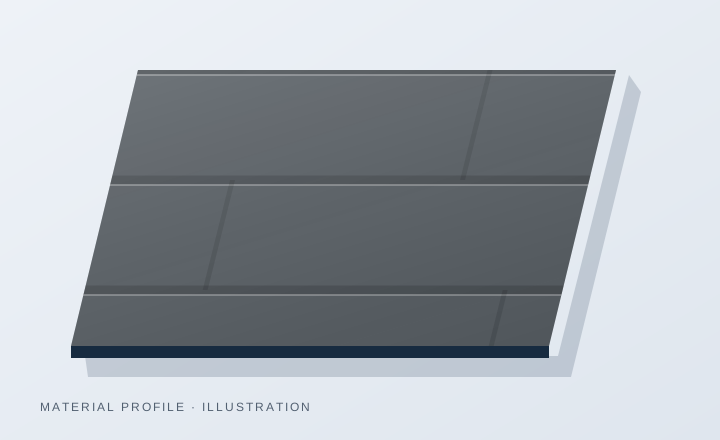
- Typical application
- Commercial and compatible residential low-slope areas
- Appearance
- Reinforced membrane; varied cap-sheet finishes
- Key decision
- Compare the specified SBS or APP assembly, including its base and cap layers.
Understanding modified bitumen
Modified bitumen membranes combine asphalt with modifiers and reinforcement. Two familiar modifier families are SBS, a synthetic rubber polymer, and APP, a plastic polymer. Their characteristics and application requirements differ, so the product specification should name the proposed system.
The phrase “torch-down roof” describes an installation approach, not every modified bitumen roof. Depending on the approved product system, installation may use heat, adhesives, self-adhered sheets or other specified attachment. The right method depends on the building, substrate, details and manufacturer instructions.
Why consider it
What this option offers
- Reinforced asphaltic membranes available in different system configurations.
- Several application approaches for suitable project conditions.
- Repair options that can be assessed for compatibility with an existing asphaltic roof.
Before you choose
Tradeoffs to discuss
- Application method and site conditions need careful planning.
- Ponding water and poor drainage must be addressed rather than covered over.
- An apparently similar roll product may not be compatible with the existing roof or proposed assembly.
What affects the installed cost?
The base and cap layers, insulation, cover board, application method, tear-off and flashing determine the scope. Small low-slope sections with many transitions can require substantial detailing. A proposal should state how wet components, deck repairs, drains and roof-to-wall connections are handled.
Ask for a written, itemized estimate for your property. A material price, warranty term or online planning range does not describe the complete installed roof.
Use our roof cost planning tool →Product options and samples
GAF’s RUBEROID SBS and APP product families illustrate asphaltic membrane options. Review the specific product’s installation and assembly requirements. A self-adhered system and a heat-applied system are not interchangeable merely because both use modified asphalt.
Bring your preferred style to the inspection. We can review the roof conditions and discuss available options, with the selected materials and installation scope recorded in your proposal.
Maintenance and repair planning
Arrange inspections of seams, cap-sheet condition, flashings, drains and transitions. Investigate recurring ponding or blisters rather than repeatedly patching the same visible symptom. Repairs and any coating must be compatible with the membrane and existing condition.
Keep the roof specifications, product information and warranty paperwork together. If a problem develops, start with a roof inspection and a clear repair scope.
See our documented Roofing Giant projects to learn how we approach inspections, roof preparation and installation. During your consultation, ask about examples relevant to the material you are considering.
Questions before you choose
Is all modified bitumen torch-applied?
No. Approved application methods vary by system. Options can include self-adhered sheets, adhesives and heat application.
What is the difference between SBS and APP?
They use different modifiers in the asphalt. SBS and APP systems have different properties and installation requirements, which should be checked for the chosen product.
Can modified bitumen be used on a porch or addition?
It may be suitable for a low-slope section after reviewing the slope, substrate, drainage and wall connections. The selected assembly must match the roof conditions.
Should I choose modified bitumen or TPO?
Compare the condition of the existing roof, building use, access, drainage, installation method and complete assembly price. A roof survey is the starting point.
Compare your options
Related roofing materials
Find the right roofing option for your property
Start with a free roof inspection in Dallas–Fort Worth. Discuss materials, review the roof conditions and receive a written estimate.