
← Compare all roofing materials
Tile & composite · Dallas–Fort Worth
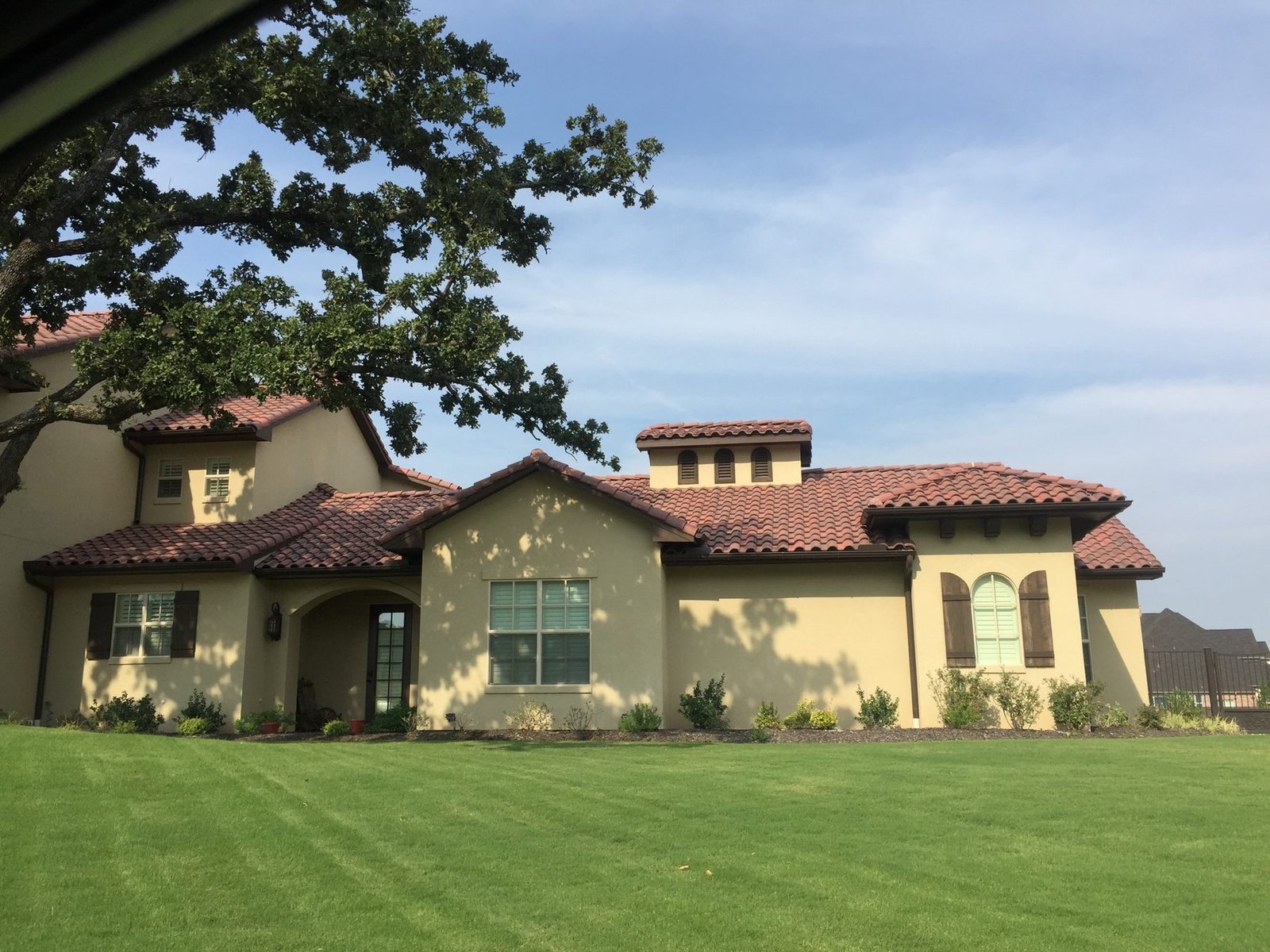
Clay tile brings a distinctive roofline to Mediterranean, Spanish and other architectural styles. A successful project pairs the chosen tile profile with suitable structural support and careful waterproofing details.
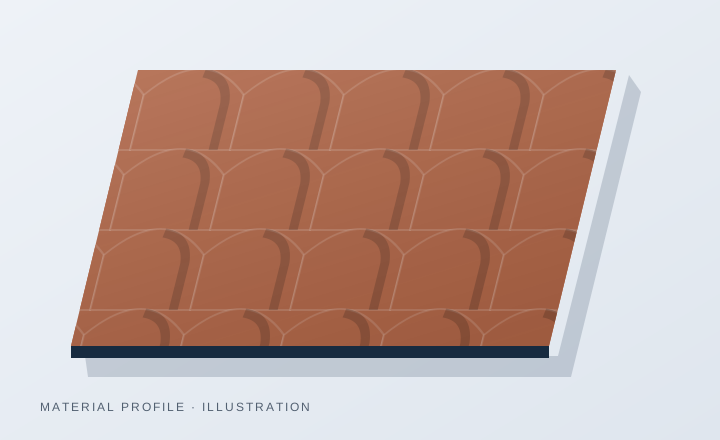
- Typical application
- Compatible pitched roofs and tile restorations
- Appearance
- Barrel, mission and other clay profiles
- Key decision
- Select the profile with the underlayment, flashing and structural requirements in view.
Understanding clay tile
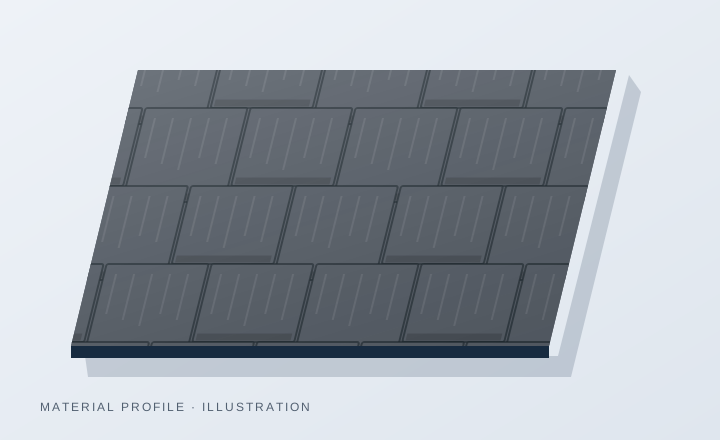
Clay roof tile is made from fired clay. Manufacturer collections include different shapes, textures and color blends. US Tile, for example, lists one-piece S and two-piece Mission profiles, illustrating why “clay tile” is a broad category rather than a single interchangeable product.
For a Dallas–Fort Worth tile roof, the existing tile condition and the system beneath it both matter. A roof replacement or restoration should address the underlayment, flashings, ridges, hips and penetrations. When changing from another roof material, evaluate the proposed assembly weight before committing to the design.
Why consider it
What this option offers
- A distinctive architectural profile and varied natural-looking color blends.
- Several shapes that create different roof rhythms and shadow lines.
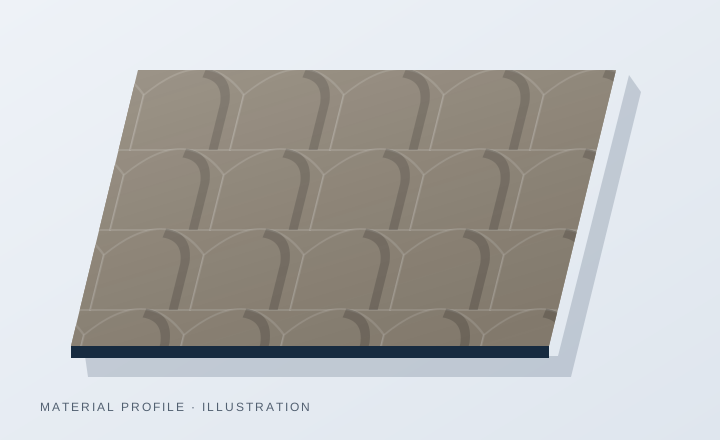
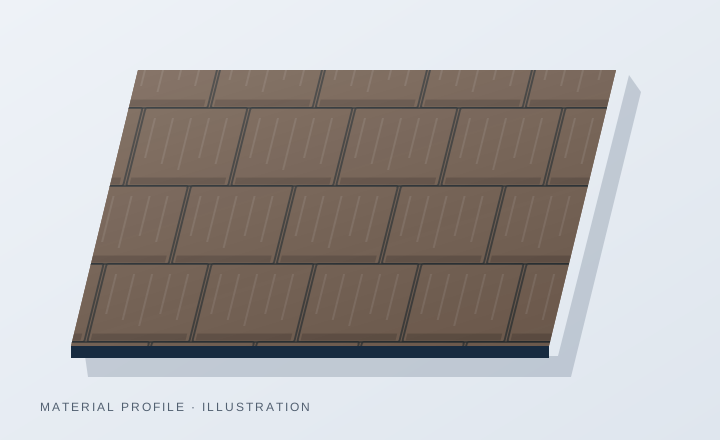
- A material to compare closely with concrete tile and tile-profile steel.
Before you choose
Tradeoffs to discuss
- Assembly weight and structural suitability require attention.
- Individual tiles can break under impact or improper foot traffic.
- Finding a compatible replacement profile matters as much as finding a similar color.
What affects the installed cost?
The tile profile and finish, roof complexity, structural work, underlayment and detailed trim all contribute to price. On a restoration, ask how existing tiles will be evaluated and whether reusable units can be preserved. Budgeting should account for any replacement units needed during access and installation.
Ask for a written, itemized estimate for your property. A material price, warranty term or online planning range does not describe the complete installed roof.
Use our roof cost planning tool →Product options and samples
US Tile’s current product catalog shows clay profiles such as one-piece S and two-piece Mission. Confirm that the selected profile and blend can be supplied for your project. Where a roof must match an existing section, use physical samples and a compatibility review rather than a screen image alone.
Bring your preferred style to the inspection. We can review the roof conditions and discuss available options, with the selected materials and installation scope recorded in your proposal.
Maintenance and repair planning
Have debris, cracked tiles, shifted units and flashing conditions checked. Access should follow the tile system’s guidance to reduce breakage. A sound-looking tile surface does not establish the condition of underlayment hidden beneath it.
Keep the roof specifications, product information and warranty paperwork together. If a problem develops, start with a roof inspection and a clear repair scope.
See our documented Roofing Giant projects to learn how we approach inspections, roof preparation and installation. During your consultation, ask about examples relevant to the material you are considering.
Questions before you choose
How is clay tile different from concrete tile?
They are different materials with their own profiles, weights, finishes and installation requirements. Compare the exact products and complete assemblies.
Can only one damaged section be repaired?
A localized repair may be possible if compatible tiles are available and the underlying system is sound. Inspection determines the appropriate scope.
Can I choose tile from an online photo?
Use photographs to narrow the style, then compare real samples and confirm product availability, roof compatibility and HOA requirements.
Compare your options
Related roofing materials
Find the right roofing option for your property
Start with a free roof inspection in Dallas–Fort Worth. Discuss materials, review the roof conditions and receive a written estimate.