
Roofing Giant · Guide
North Texas sits in the most hail-prone region of the country. This guide shows how hail size relates to roof damage, what inspectors and adjusters actually look for, and how to document a storm so a claim holds up.
When hail happens here
Dallas–Fort Worth hail season runs from March through June, when warm Gulf moisture meets cold fronts and dry lines over North Texas. A second, smaller season arrives in September and October. Storms usually form to the west and track east-northeast, which is why Parker, Tarrant and Denton counties are often hit first and Collin and Rockwall counties later the same evening.
You can confirm the date and size of hail at your address using NOAA’s Storm Events Database and the Storm Prediction Center reports; our storm lookup page walks through both.
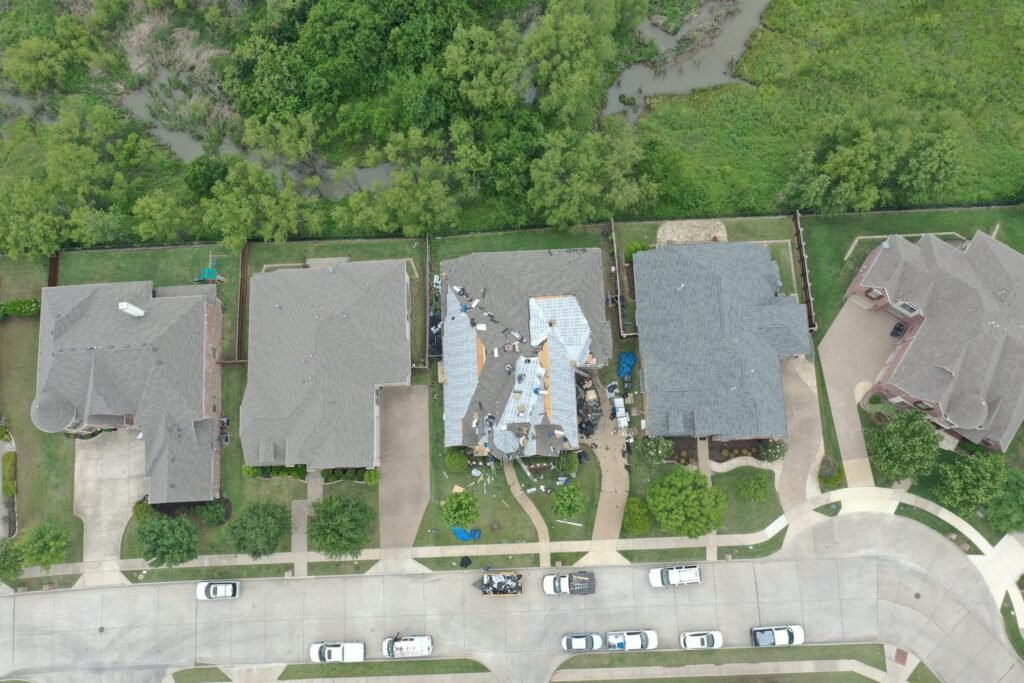
What hail damage looks like
- Bruises. Soft, dark, slightly sunken spots where the granules were knocked loose and the fiberglass mat was fractured. They feel like a bruise on an apple.
- Granule loss. Bare patches with the black mat showing; granules collect at downspout outlets and in gutters.
- Collateral dents. Gutters, downspouts, roof vents, pipe boots, the AC condenser fins and window screens all show impact marks and are the first thing an inspector photographs.
- Cracked or shattered shingles. Common with hail above two inches or on older, brittle three-tab shingles.
- Wind creasing. Horizontal creases where wind lifted the shingle; often accompanies hail and is also a covered loss.
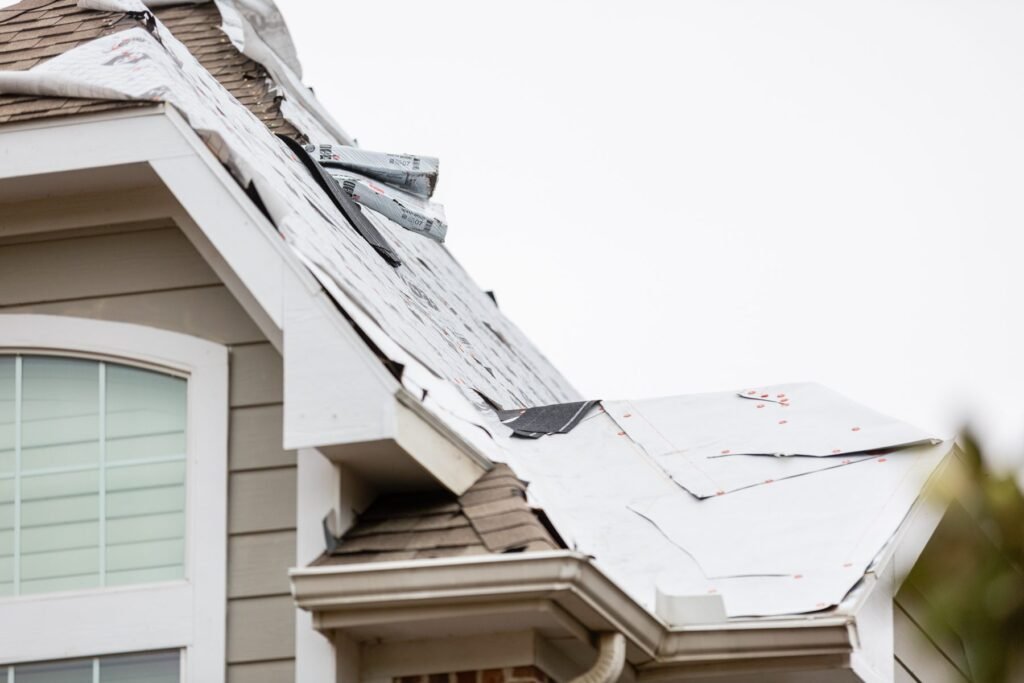
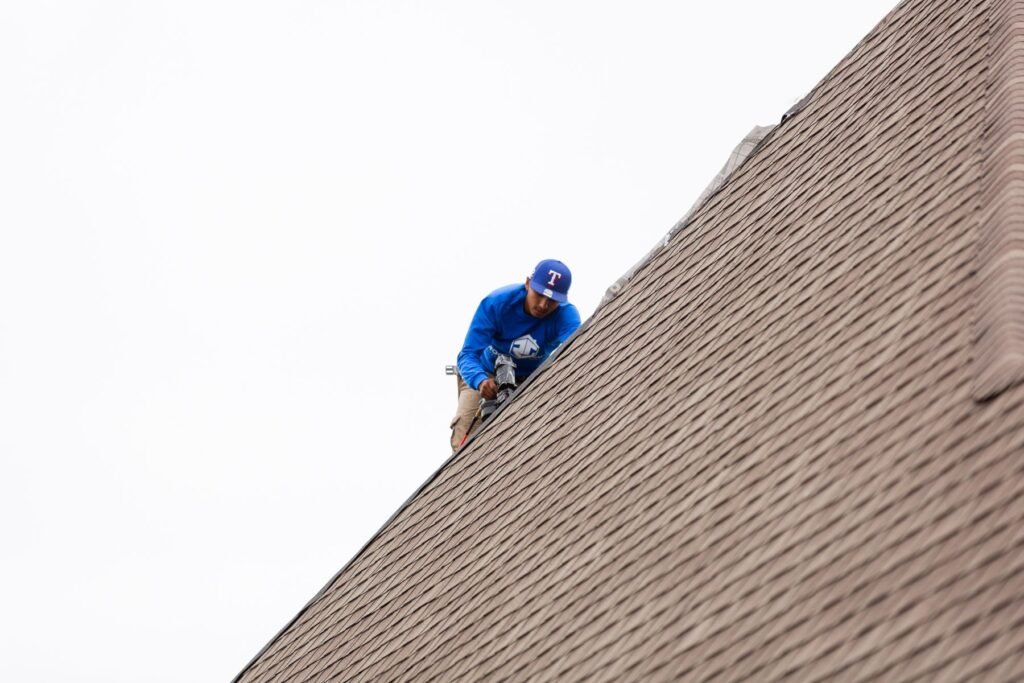
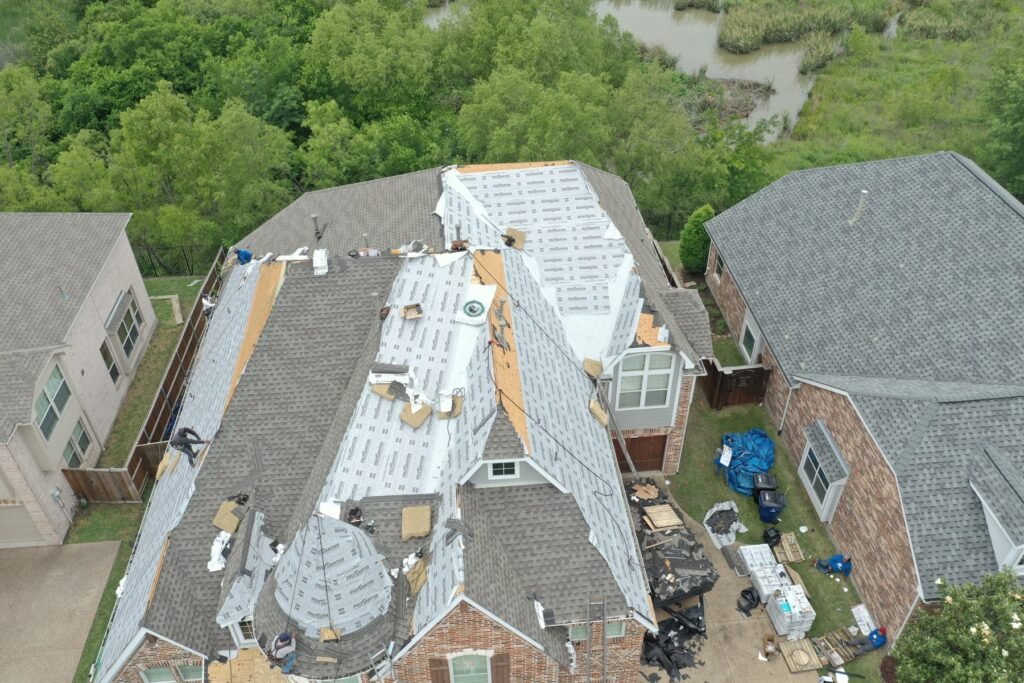
How an inspector documents it
Inspectors mark a 10-by-10-foot test square on each slope and count the hits inside it. Most carriers consider eight or more hail hits per square on multiple slopes as a replacement condition, though the standard varies. Every hit is chalked and photographed, collateral damage is photographed with a ruler or coin for scale, and the report notes the storm date from NOAA records. That package is what your adjuster expects to see.
What to do after a storm
Stay off the roof
Look from the ground and inside the attic. Photograph what you can see safely.
Run the self-check
Our hail damage self-check scores the warning signs in two minutes.
Book a free inspection
Get test squares, photos and a written report before calling your insurer.
Decide with numbers
Use the deductible calculator; read the claim process guide; then file if it makes sense.
Hail questions
How long do I have to file a hail claim in Texas?
It depends on your policy. Many Texas policies require notice within one year of the date of loss and some as little as 180 days, so do not wait for a leak. Check your policy and get the inspection documented promptly.
Will impact-resistant shingles stop hail damage?
Class 4 shingles resist bruising from the two-inch steel ball test and often earn an insurance discount, but no shingle is hail-proof. They are the best choice for most DFW replacements when the budget allows.
Can a roofer tell me if I have a claim?
A roofer can document the damage and tell you whether it meets the thresholds carriers usually apply. Only your carrier decides the claim. Roofing Giant meets the adjuster on the roof so nothing is missed.
Think the storm reached your roof?
Schedule a free inspection. If we find damage you get the documentation a claim needs; if we do not, you get peace of mind in writing.